mardi 14 juillet 2009

Just a Thought

As I continue visiting various memorials and monuments to World War II, Vichy, and the Resistance, I am struck by the ever-present tanks, guns, batteries, and other forms of war machinery. As I contemplated a tank and rocket launcher today at Le Memorial (where we have our seminars), I began to reflect on the industry of war and the amount of money used even today to fight one another or ward off those that would want to fight.

What if that money was put into educating every child on earth in an equitable way?
What if that money insured that every human on the planet was afforded the opportunity to eat and nourish themselves healthily?
What if that money was used to create a system of equitably housing every person on earth?
What if that money was used to conquer illnesses like cancer, AIDS, etc.?

Maybe if we started from this point, fighting and war would become unnecessary. They would eventually be replaced by hope and understanding. Just a thought.......

Well wishes...

Happy Bastille Day- French Independence Day!

lundi 13 juillet 2009

Reflections on the past...

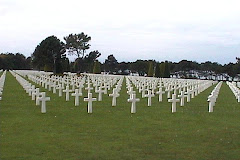
Well, It has been a whirlwind of adventure over the past week and I apologize for not posting. I am still caught thinking about Mont Valerien and these thoughts have been joined by those that I now have with regards to the two-day tour of the Normandy battlegrounds and beaches. I am flooded on a daily basis with reflections, thoughts, questions and a search for answers.
Mont Valerien is a moving memorial to World War II, soldiers and all fought to free France under the Occupation. If you Google the site, you will see beautiful images of the bronze depictions of various parts of the group that contributed to the freedom of France. There is an eternal flame and when you enter into the actual memorial (under lock and key) you are met with a sobering reminder as there are sixteen coffins in the crypt representing each part of the war. A seventeenth has been reserved for the last living member of the Resistance/Liberators, all of whom are now 85 and older. They certainly have planned though to honor these men and women in an important way.
While that was extremely moving, one of the most emotional pieces was climbing the hill and witnessing what occurred there. This hill had always been important historically and holds an old fort atop it. However, during the war and Occupation, over 1000 people were brought there and systematically executed. There is a bell that was crafted with each name on it that rests across from a small chapel. This chapel served as a "holding" cell for all those awaiting execution. Letters were written to families and loved ones, sometimes on the walls and others on scraps of whatever they could find. One of the most powerful things was listening to an individual from our group read a copy of one of these letters written by a 17 year old boy to his father before he was led off to be shot. The power of the spoken word is truly amazing.
After this recitation, we went to the actual field where these people were executed by firing squad. I am including a photo of one of the executions. Only three photos actually survive to this day and were recovered years later when it was discovered that a German soldier had taken photos of one of the killings. We walked down a cobble-stoned alleyway where these resistors were taken to their death. That walk was sobering in and of itself. However, it was striking to sit and contemplate this extremely peaceful place and face the realization that it was the location of such death and debasement. These individuals were killed for being communists, passing out resistance flyers, being Jewish, being a member of the Resistance, or for simply speaking out. Over 1000 lives lost, many of whom were in their late teens and early twenties. What might have become of these lives cut short? I am consistently awe-struck by the extent to which we as humans can treat one another.

mardi 7 juillet 2009

Over the weekend...

On friday we left for Lyon which was the center of the Resistance in France. We spent two days there visiting various historic sites. One of the most interesting was the Museum of the Liberation and Deportation about which I will talk tomorrow. Then we continued, on Sunday, to Vichy, France- the capital of the government of collaborators/occupied France. On the way, we stopped at a fascinating location- a cemetery created for a group of Senegalese black, African soldiers killed (and maimed post-mortem- being run over by tanks to further the disrespect). It was a cemetery created in a West African style that looked out of place due to the fact it was in the middle of farming fields. We spent a day in Vichy and did a walking tour of the city. What a beautiful place with a sordid past that it seems everyone whispers about for fear of offending anyone in this city known for its water- thermal, curative springs.

Back in Paris for Monday and today we visited Le memorial de la France combattante. Fascinating place and I am still processing its power as we speak so there will be more about this tomorrow.

jeudi 2 juillet 2009

Seminar Reflection

Today was quite an impressive day. It started out with a leading French historian, Henry Rousso, who has written many books on the subject of World War II and after. We are using a book of his called Vichy Syndrome which deals with the function of memory and how the French have come to terms with their past especially the collaboration with the Nazi Regime. His insights were pretty fascinating and certainly gave me a lot to think about as I reflect on how these events transpired in a country that for hundreds of years has been considered the bastion of culture and civilization.

This afternoon was to top off the day with a journalist, Annette Levy-Willard, who is an editor and journalist for Liberation, a newspaper known for its leftist leanings (http://www.liberation.fr/) . She was recruited by Jean-Paul Sartre and Simone de Beauvoir for this job which is, in and of itself, fascinating to me. She was the first to interview a Vichy official, Maurice Papon, who was finally brought to justice for his crimes in the nineties. This event was extremely important in the struggle for France to finally realize and come to terms with some of its ugly past. Papon was an official in the government namely the Bordeaux region. He single handedly signed off on documents approving the arrest and deportation of Jews in the region and actively seeking those in hiding. Annette describes him as well-behaved and quite slick, however he was not an anti-semite. He originally denied that he even signed these documents and eventually stopped this claim. One of the most striking pieces that Annette shared was the fact that Papon flatly insisted that he was just doing his job and he would do it again.

Papon almost escaped prosecution by claiming that he saved over 100 Jews. His contention was that he crossed their names off of the list. Annette and the lawyer prosecuting this crime uncovered important details that in no uncertain terms refuted Papon's claims. Yes, he crossed the names off of the list, however these names should never have been there in the first place because they were not Jews. For example, it was discovered that one of the names on the list that was crossed was identified as Jewish but that was only her married name. Papon was actually doing as the rule required because these people did not meet the requirements set forth by the Nazi Regime.

In the end, it all comes down again to the concept of indifference. Papon could have done something but due to his desires as a technocrat, he was blinded by ambition. All of the people that he had arrested and eventually deported perished at Auschwitz. Indifference seems to be a dangerous tool wherever exercised.

mercredi 1 juillet 2009

Seminar Reflection

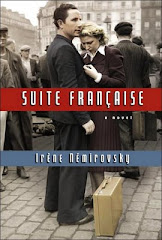
Today, we had a pretty amazing speaker. Olivier Rubenstein, editor in chief of Denoel Publishing company came to speak to us today. He spoke for about an hour on Suite Francaise by Irene Nemirovsky. This book is amazing and I previously read it before coming to this seminar. It is an autobiographical piece that Nemirovsky wrote in experiencing the French round up and deportation of Jews and any other undesirables. Nemirovsky ended up being killed in a concentration camp but her manuscript lived on because her daughter was instructed to carry a suitcase of her mother's belongings with her until the end of the war. The child knew very little about what was in the suitcase and anticipated giving it back to her mother at the end of the war. When the end of the war came, her daughters survived but Irene perished. It was not however until 2006 that the book was published because Rubenstein came into contact with the daughter who was living in the south of France. He was responsible for its publication and we were able to hear first hand how this story came about and was published. It is pretty amazing. They have subsequently translated the book into English and many other languages and is very much worth the read.

As I get more into this seminar and learn additional details, I still wonder how people stand aside when these things happen. People in Occupied France willingly participated in the Vichy government and persecution of Jews/undesirables. Some resisted violently! Most sat by and watched in silence, indifferent. I was engaged in a great deal of thought about the last group because no matter what the situation, the "silent majority" often sits by and does not act either way. Personally, I believe that these people are just as culpable as those who perpetrated atrocities. To sit idly by and watch as the world passes and do nothing, ca c'est insupportable!

Ahhh, when in Paris...

OK, after going to a pretty amazing museum on Charles de Gaulle that is only about a year old, I decided to go over to Notre Dame and the Latin Quarter. This area is one of my favorite in Paris. The lively nature of this ancient area is amazing. As I just walked through the gardens at Notre Dame and then through the narrow streets and alleys of the le quartier latin, I grew to become hungry and began to search for a restaurant that had a good tomato/mozzarella salad. What can I say, I was craving it! It really hit me just how international this city really is. Paris is the number 1 most visited city in the world for tourism so when you are around others, there are people from all walks of life speaking a variety of languages. However, in the Latin Quarter alone the number of restaurants is truly astounding. I ate Italian, had a small desert at a southern Tunisian bakery, and finished it off with a homemade gelato a little later after walking around at a small Italian gelateria. As I walked around to decide what I wanted though, I could have chosen Indian, Afghan, Greek, French specialties, Korean, Japanese, Ethiopian, Mexican, Spanish, and the list could go on. I think if I chose to live in Paris and eat at one of these restaurants each day, I would be unable to complete the task before I died. It is truly amazing though!